Introduction: The Cold Chain Decision That Defines Your Product Quality
In the food industry, temperature is not just a number on a dial — it is the difference between a product that sells and one that fails quality inspection.
Whether you run an artisan gelato shop, a central production kitchen, a seafood processing facility, or a hotel banquet operation, the equipment you use to chill and freeze directly determines your food’s texture, safety, shelf life, and profitability. Yet many food operators and equipment buyers still treat commercial refrigerators and blast freezers as interchangeable — a costly misconception.
This guide draws on Realmann’s two decades of engineering and manufacturing experience in commercial refrigeration to explain the science behind each technology, the applications they serve, and the specifications buyers must evaluate before making a purchasing decision.
Understanding Commercial Refrigeration: More Than Just “Keeping Things Cold”
Commercial refrigeration is a broad category that includes any equipment designed to maintain food at controlled temperatures — from display cases and reach-in coolers to walk-in cold rooms and under-counter refrigerators.
What Commercial Refrigerators Do
A commercial refrigerator maintains product temperature within a stable range, typically 0°C to +8°C, to slow bacterial growth and preserve food quality during storage and service. These units are designed for:
- Ingredient storage in professional kitchens
- Beverage and perishable display in retail environments
- Dairy, produce, and deli holding in foodservice operations
- Pharmaceutical and laboratory cold storage
Where Most Buyers Go Wrong
Standard commercial refrigerators are designed for storage — not for cooling hot or warm products quickly. Placing freshly cooked food directly into a reach-in refrigerator forces the unit to work against its design parameters, raises the internal temperature of surrounding products, and in many jurisdictions, violates HACCP food safety regulations.
This is where blast freezers and blast chillers enter the picture.
What Is a Commercial Blast Freezer?
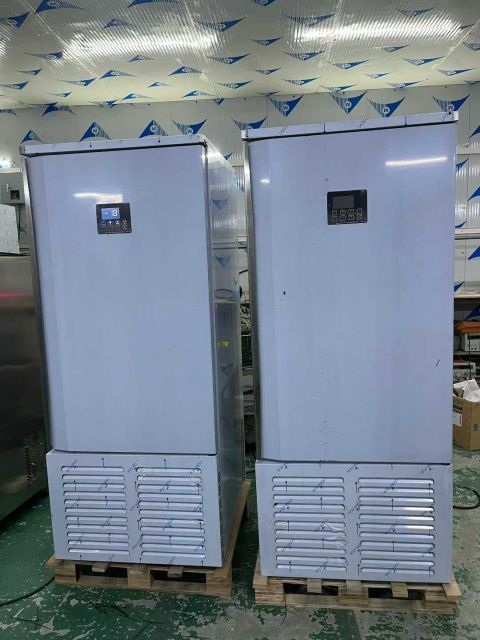
A commercial blast freezer (also called a blast chiller or shock freezer) is purpose-built rapid-cooling equipment that uses high-velocity forced air at very low temperatures to extract heat from food products at the fastest possible rate.
The Science: Why Speed Changes Everything
When food freezes, water molecules inside the product crystallize. The size of those ice crystals is determined almost entirely by how fast freezing occurs:
- Slow freezing (conventional freezer): Large ice crystals form, puncturing cell walls, degrading texture, causing moisture loss and drip upon thawing
- Rapid blast freezing: Micro-crystals form uniformly throughout the product — cell walls remain intact, texture is preserved, moisture is retained
The most critical phase is the crystallization zone between -1°C and -5°C. A commercial blast freezer drives product through this range in minutes, not hours, locking in quality at the cellular level.
Blast Chilling vs. Blast Freezing
These terms are related but distinct:
| Function | Temperature Target | Typical Use |
|---|---|---|
| Blast Chilling | +70°C → +3°C in ≤90 min | Cook-chill operations, pastry, prepared meals |
| Blast Freezing | +70°C → -18°C in ≤240 min | Long-term frozen storage, gelato, seafood, meat |
Both functions are often available in a single combination blast chiller/freezer unit — the most versatile option for multi-application food production environments.
Commercial Refrigerator vs. Blast Freezer: Core Differences
| Criteria | Commercial Refrigerator | Commercial Blast Freezer |
|---|---|---|
| Primary Function | Temperature maintenance | Rapid heat extraction |
| Temperature Range | 0°C to +8°C | -18°C to -40°C (blast); +3°C (chill mode) |
| Cooling Method | Static or fan-assisted | High-velocity forced air |
| Designed for Hot Food | ❌ No | ✅ Yes |
| Ice Crystal Control | None | Micro-crystallization |
| HACCP Compliance | Storage only | Full cook-chill/freeze cycle |
| Food Texture Preservation | Moderate | High (cellular integrity maintained) |
| Typical Applications | Ingredient storage, display | Production kitchens, gelato, central cook |
Key Applications: Where Each Technology Excels
Commercial Refrigerators in Food Service
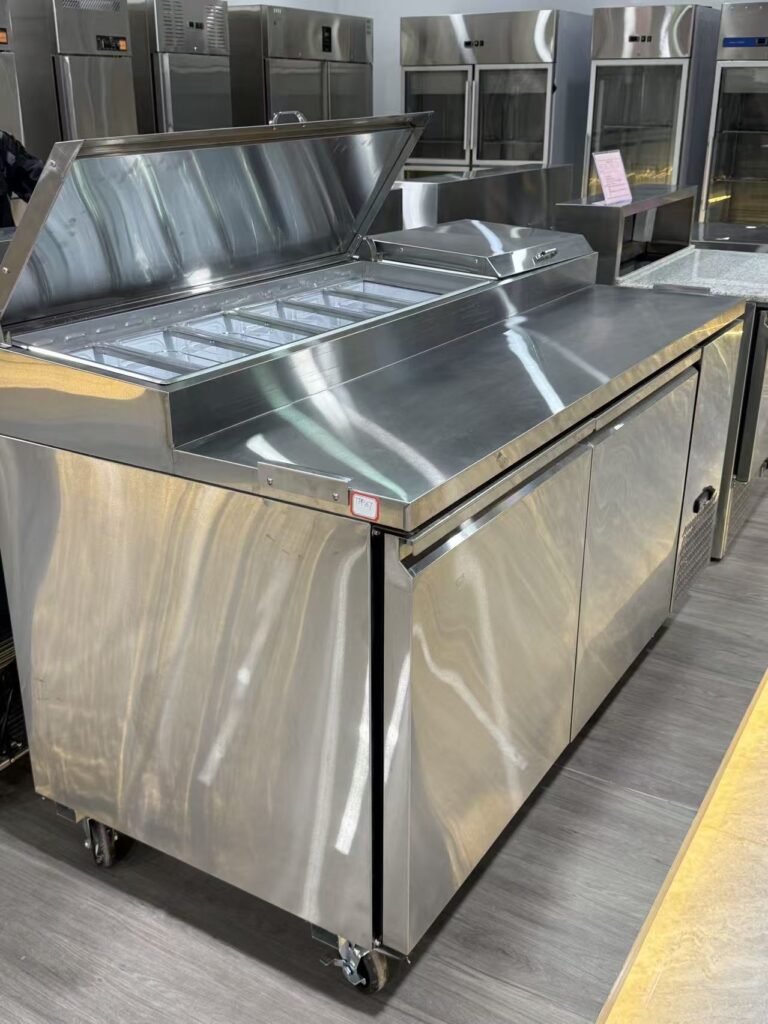
Restaurant and hotel kitchens rely on undercounter refrigerators, upright reach-in units, and pass-through refrigerators for ingredient accessibility during service. Retail food businesses use glass-door merchandising refrigerators for beverage and prepared food display. Bakeries and pastry operations use refrigerated proofing cabinets to control fermentation rates in dough.
Blast Freezers Across Food Production
Gelato and ice cream production is perhaps the most technically demanding application for blast freezing. Achieving the signature silky, dense texture of premium gelato requires driving product through the crystallization zone in under 20 minutes — a standard that only high-performance blast freezers can meet consistently.
Seafood and protein processing relies on blast freezing to comply with parasitic kill-step regulations (such as the FDA’s -20°C for 7-day requirement for raw fish served in sushi applications) while preserving the fresh-caught texture that premium products command.
Central production kitchens and cook-chill operations use blast chillers as a core HACCP control point, rapidly reducing cooked food from +70°C to +3°C to arrest bacterial growth before chilled distribution.
Pastry and confectionery production benefits from blast chilling to set chocolate coatings, stabilize mousse layers, and accelerate production cycles without sacrificing texture or structure.
Technical Specifications That Determine Real-World Performance
When evaluating commercial blast freezers or refrigerators for purchase, specification sheets can be misleading if you do not know which numbers to interrogate.
1. Blast Freeze Cycle Time
Measured as the time to reduce a product from +70°C to -18°C core temperature in a standard product load. This is the primary performance indicator for blast freezers. Manufacturers sometimes quote air temperature rather than core product temperature — always clarify which metric is being used.
2. Refrigerant Type
Modern commercial refrigeration increasingly uses R290 (propane) or R452A refrigerants for lower Global Warming Potential (GWP) and compliance with European F-Gas regulations and U.S. EPA standards. Buyers specifying equipment for EU markets should confirm refrigerant compliance as a minimum requirement.
3. Inverter Compressor Technology
Inverter-driven compressors modulate speed in response to load demand — delivering significant energy savings (typically 20–40% versus fixed-speed equivalents), more stable temperature control, reduced noise, and longer compressor lifespan. For commercial applications with variable load cycles, inverter technology pays back its premium through operating cost reduction.
4. Airflow Design and Uniformity
In blast freezers, the distribution of high-velocity cold air across the product load is critical to achieving consistent core temperature reduction. Uneven airflow creates hot spots, inconsistent freezing, and surface dehydration (“freezer burn”) on exposed product faces. Ask manufacturers for airflow uniformity data, not just fan specifications.
5. Control System and Data Logging
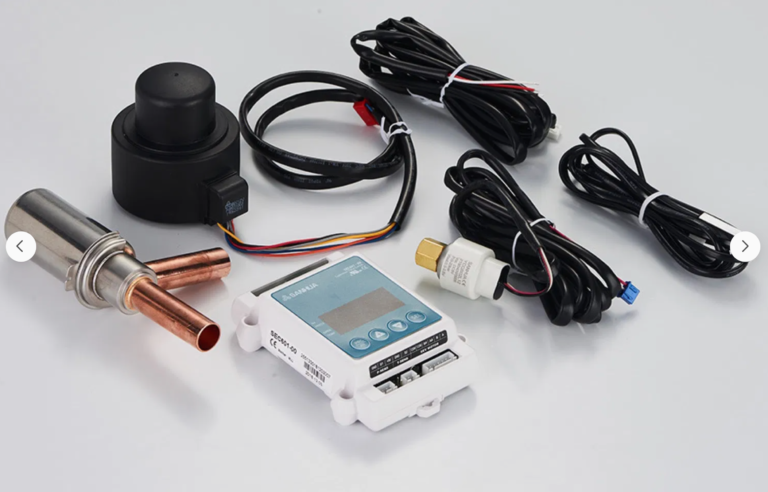
HACCP-compliant operations require time-temperature documentation for every cooling cycle. Look for units with integrated data logging, USB or cloud export capability, and configurable HACCP alarm thresholds. For multi-site operations, remote monitoring connectivity is increasingly a procurement standard.
6. Construction and Hygiene Design
Commercial food equipment must meet NSF/ANSI 7 (U.S.) or EN 1672-2 (EU) sanitation standards. Evaluate interior finish (food-grade stainless steel), drain design (self-draining or accessible for cleaning), and gasket type (removable, autoclavable where possible) as hygiene-critical specifications.
Realmann: Commercial Refrigeration Manufacturer for the Global Food Industry
Realmann is a professional manufacturer of commercial refrigerators, blast chillers, and blast freezers, serving food businesses, equipment distributors, and OEM brand partners across more than 50 countries.
Manufacturing and Engineering Capability
- Dedicated R&D facility: In-house engineering team for product development, energy optimization, and custom application solutions
- Full OEM/ODM program: Custom branding, configuration, dimensions, control software, and packaging for private-label and distributor partners
- Certifications: CE, CB, ETL, RoHS, and NSF compliance available across product lines
- ISO 9001 quality management: 100% pre-shipment performance testing and documentation
- Refrigerant flexibility: R290, R452A, and R404A configurations to meet market-specific regulatory requirements
Core Product Lines
- Countertop and undercounter commercial refrigerators
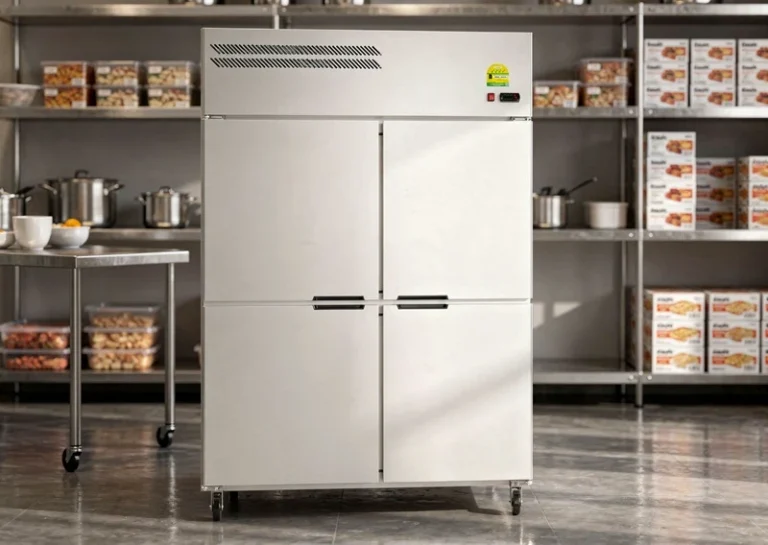
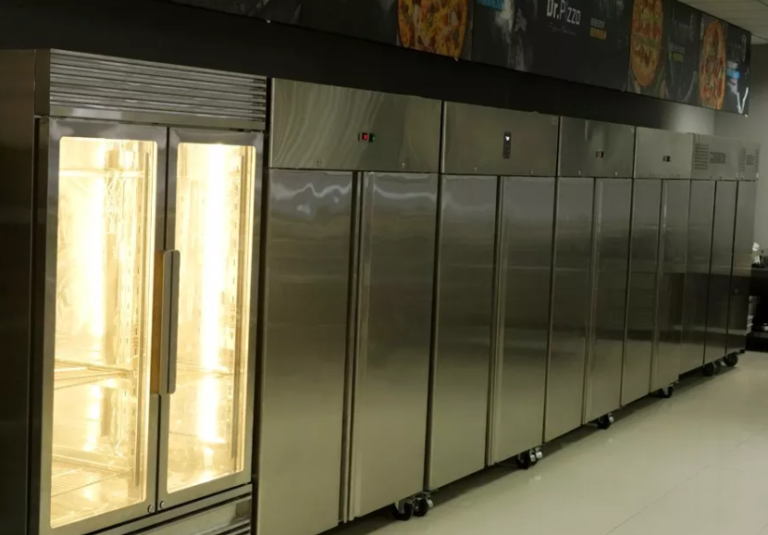
- Upright reach-in refrigerators and freezers (single and multi-door)
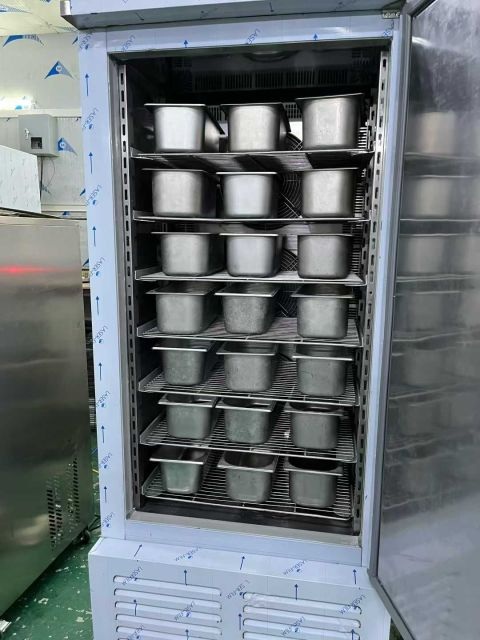
- Blast chillers (gastronorm and bakery tray compatible)
- Blast freezers (single and multi-trolley capacity)
- Combination blast chiller/freezer units
- Gelato blast freezers (high-velocity micro-crystallization optimized)
- Supermarket and foodservice display refrigeration
Global Distribution and OEM Partnership Program
Realmann actively recruits authorized regional distributors and OEM brand partners in all markets. The partnership program offers:
- Factory-direct pricing with structured distributor margin support
- Full OEM/ODM branding and product customization
- Dedicated technical and sales support for key accounts
- Flexible MOQ for market entry and scaling
- Co-developed marketing materials and technical documentation
- Training programs for distributor technical teams
What to Look for in a Commercial Refrigeration Manufacturer
Not all manufacturers are equivalent. Beyond product specification, the manufacturer relationship determines your long-term supply chain reliability, warranty support quality, and ability to differentiate your product line in competitive markets.
Engineering Depth
A capable manufacturer should be able to explain — not just quote — the engineering decisions behind their products. Ask about refrigerant circuit design, airflow modeling methodology, and energy consumption testing protocols. Vague answers indicate an assembler, not a manufacturer.
Certification Traceability
Request copies of actual test reports, not just certificate numbers. Legitimate certifications are issued by accredited third-party bodies (TÜV, UL, ETL, SGS) and include specific model references and test dates.
After-Sales Infrastructure
Commercial refrigeration equipment requires service access. Evaluate the manufacturer’s spare parts availability, service documentation quality, and responsiveness to technical support requests before making a long-term sourcing commitment.
Production Capacity and Lead Time Transparency
For distributors managing seasonal demand peaks — common in foodservice and retail — production capacity and lead time reliability matter as much as unit price. Ask prospective manufacturers for capacity data and on-time delivery performance records.
FAQ: Commercial Blast Freezers and Refrigerators
1. What is the difference between a blast chiller and a blast freezer?
A blast chiller rapidly reduces food temperature from hot (+70°C) to refrigerated (+3°C), designed for cook-chill operations. A blast freezer takes product from hot or ambient temperature down to frozen (-18°C or below), intended for longer-term frozen storage. Many commercial units offer both functions in a single machine with switchable operating programs.
2. Can I use a standard commercial freezer instead of a blast freezer?
No — for quality-sensitive applications. A conventional freezer typically takes 4–8 hours to freeze product to core temperature, producing large ice crystals that damage cellular structure, degrade texture, and increase drip loss on thawing. A blast freezer achieves the same result in 60–120 minutes, preserving food quality at the cellular level.
3. Is blast freezing required for HACCP compliance?
Blast chilling is a recognized HACCP critical control point in cook-chill food production systems. Many national food safety regulations — including EU Regulation 852/2004 and FDA Food Code guidelines — specify maximum time-in-temperature-danger-zone limits that standard refrigerators cannot reliably meet when cooling hot food. Blast chillers are the industry-standard solution for this control point.
4. What capacity blast freezer does my operation need?
Sizing depends on your production volume (kilograms per cycle), product type (dense vs. aerated), trolley or pan configuration, and cycle frequency. Realmann’s technical team provides application-specific sizing calculations based on your production profile — contact us with your output data for a recommendation.
5. What refrigerant should I specify for European markets?
For EU markets, specify equipment using R290 (propane) or other low-GWP refrigerants to comply with EU F-Gas Regulation 517/2014, which is progressively phasing down high-GWP refrigerants including R404A. Realmann offers R290 configurations across its blast chiller and refrigerator lines.
6. How does inverter technology improve blast freezer performance?
Inverter compressors vary their operating speed in real time based on cooling demand. During the initial high-load phase of a blast cycle, the compressor runs at maximum speed to drive rapid temperature reduction. As the product approaches target temperature, it throttles back — maintaining precise temperature without the energy waste and thermal cycling of fixed-speed compressors. This results in faster cycle times, better energy efficiency, and reduced wear on the refrigeration system.
7. Can Realmann produce blast freezers under my brand?
Yes. Realmann offers a full OEM/ODM program that includes custom branding, color, panel graphics, control interface customization, and packaging. Minimum order quantities vary by model — contact Realmann’s OEM team to discuss your specific requirements and timeline.
8. What certifications does Realmann equipment carry?
Realmann products are certified to CE and CB standards for international markets, with ETL available for North American distribution, and NSF compliance for food equipment sanitation requirements. All certifications are issued by accredited third-party bodies and are available for customer review upon request.
9. How long does a commercial blast freezer typically last?
With proper maintenance, commercial blast freezers from quality manufacturers have a service life of 10–15 years. Key factors include refrigerant type, compressor quality, cleaning frequency, and condenser maintenance. Realmann provides full technical documentation and spare parts support to maximize equipment service life.
10. What is the typical lead time for OEM orders?
Standard OEM orders with custom branding typically require 30–45 days from order confirmation, subject to order volume and configuration. Custom dimension or non-standard specification projects may require additional engineering lead time. Realmann’s production planning team provides confirmed lead time commitments at order stage.
Conclusion: Cold Chain Equipment Is a Long-Term Business Asset
The refrigeration equipment a food business installs today shapes its operational capacity, product quality, and regulatory compliance posture for the next decade. A commercial blast freezer is not an optional upgrade — for any operation producing, processing, or distributing temperature-sensitive food products, it is a core infrastructure investment.
Choosing the right equipment means understanding the technology, not just comparing price tags. Choosing the right manufacturer means evaluating engineering integrity, certification authenticity, and the long-term partnership a supplier can actually deliver.
Realmann has spent two decades engineering commercial refrigeration solutions trusted by gelato producers, central kitchens, seafood processors, hotel groups, and food equipment distributors worldwide. Our manufacturing capability, OEM/ODM flexibility, and global distribution network make us a partner built for serious food businesses.