In today’s food industry, production lines are under pressure from two directions at once: more diverse product demand and stricter hygiene expectations. A factory may need to switch from short-shelf-life chilled products to long-shelf-life frozen products within the same week, while still maintaining a clean process flow between preparation and packaging.
That is where equipment needs to be more than cold—it needs to be smart.
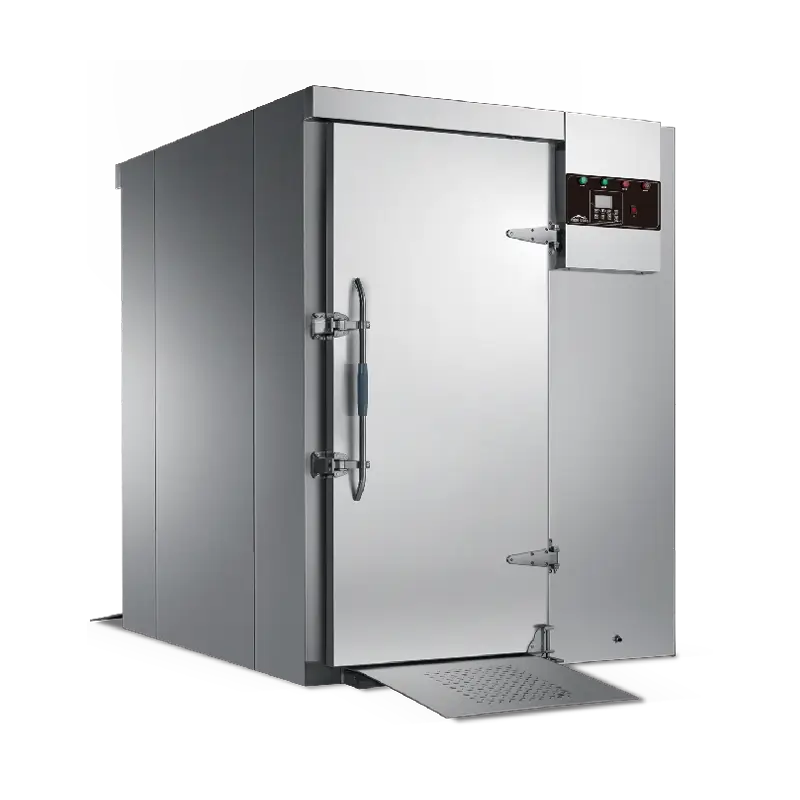
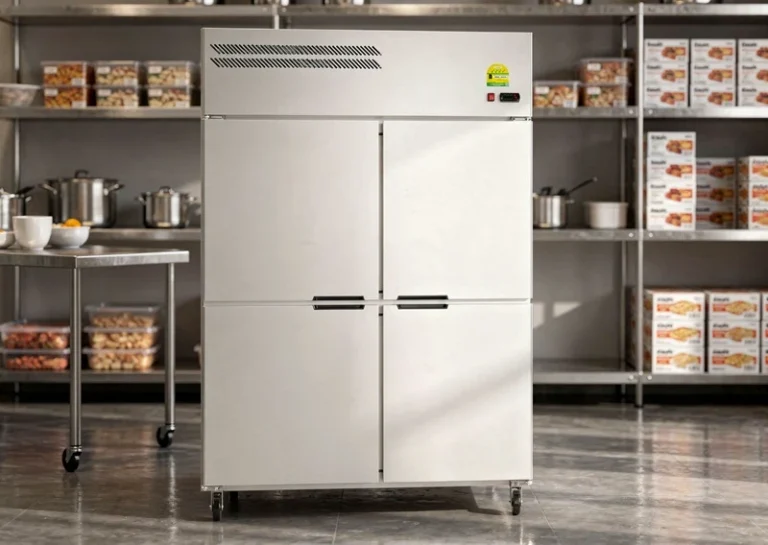
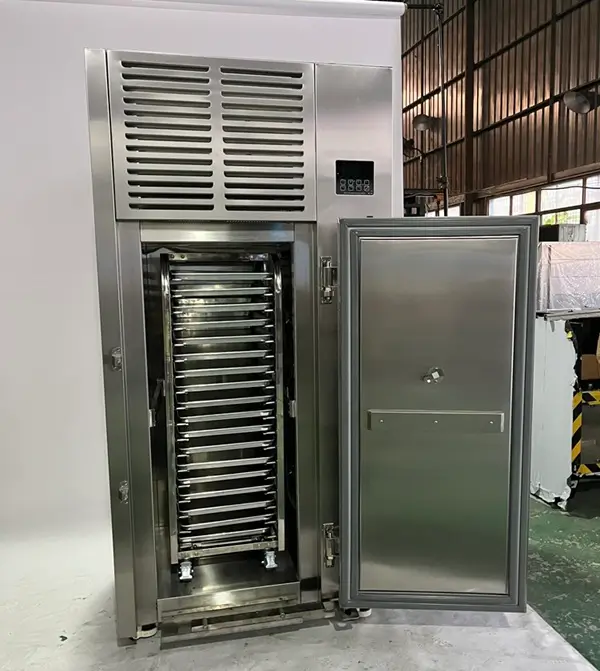
Realmann TUNNEL & PLUG-IN / REMOTE BLAST CHILLER & FREEZER CABINETS are designed to help food manufacturers build a more flexible, process-oriented production system. Instead of treating chilling and freezing as separate investments, Realmann provides a solution that aligns refrigeration performance with real factory workflow, hygienic zoning, and throughput planning.
Why Flexible Capacity Matters More Than Ever
For many food processors, the challenge is no longer just output volume. It is the ability to handle changing product categories, seasonal demand, urgent orders, and tighter delivery cycles without rebuilding the entire line.
A chilled bakery product, a frozen ready meal, and a processed meat item do not always require the same end temperature, cycle, or production rhythm. If one line can only do one job, capacity becomes rigid. If one system can support both rapid chilling and deep freezing, the plant gains much more room to respond.
That is the logic behind Realmann’s dual-mode cabinet concept.
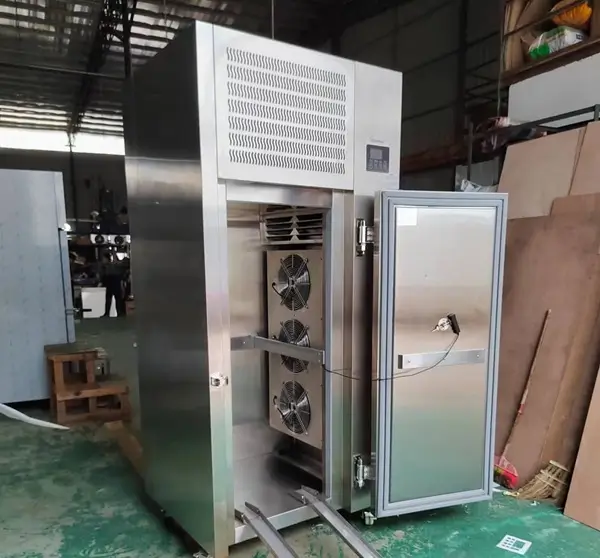
One System, Two Production Missions: Blast Chilling and Blast Freezing
The value of a modern tunnel blast system is not just cold output. It is the ability to shift between Blast Chilling and Blast Freezing based on actual production needs.
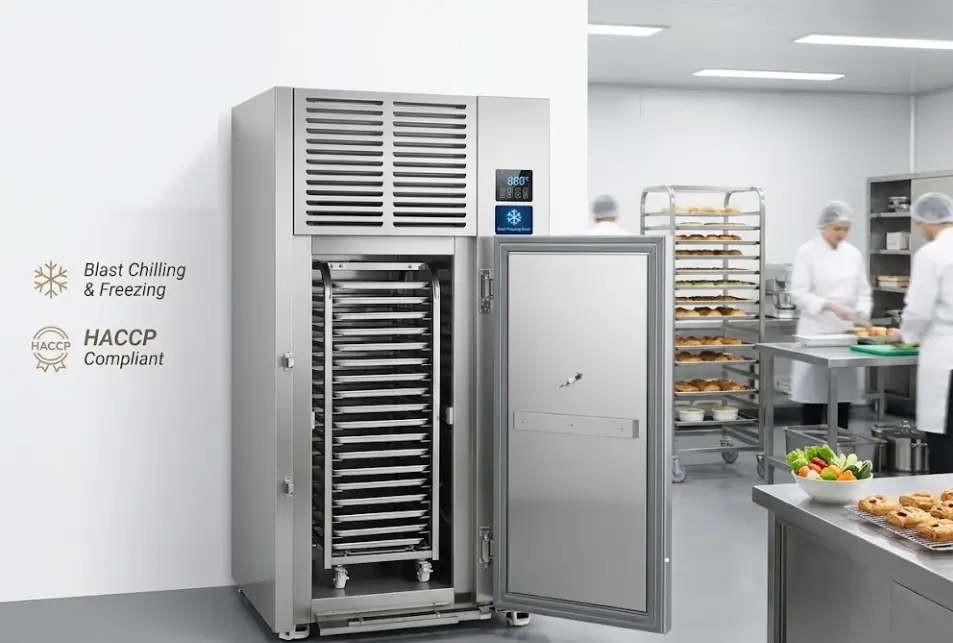
In Blast Chilling mode, the goal is to reduce product temperature quickly after cooking or processing so the product can move safely and efficiently into the next stage, whether storage, packaging, or distribution. In Blast Freezing mode, the system drives the product to a much lower core temperature for longer shelf life and cold-chain transport.
According to the specifications you provided, Realmann equipment supports:
- Rapid chilling: +90°C to +3°C in 90 minutes
- Deep freezing: +90°C to -18°C in 240 minutes
- Operating temperature range: +3°C to -40°C
This dual capability allows processors to switch capacity according to order mix rather than dedicate one machine to one product category only.
For factories serving multiple channels—retail, foodservice, central kitchens, or private-label projects—that flexibility can translate directly into higher equipment utilization and better return on investment.
Tunnel Design Is More Than an Inlet and Outlet
What makes the TUNNEL concept especially valuable in a food factory is not only its shape, but its role in hygienic process design.
A tunnel configuration can act as a controlled bridge between product preparation areas and inner packaging areas. In practice, this supports a clearer physical separation between higher-risk and cleaner production zones. In food safety systems, controlling hazards, defining critical control points, and managing process flow are core principles of HACCP. Hygienic design guidance for food facilities also emphasizes defining distinct hygienic zones, controlling the flow of materials and personnel, and using physical separation to reduce cross-contamination risk.
For manufacturers of ready-to-eat or sensitive foods, this matters. FDA guidance notes that food safety systems depend on hazard analysis and preventive controls, and environmental monitoring becomes necessary where contamination of ready-to-eat food with an environmental pathogen is a relevant hazard.
In other words, the tunnel is not only a refrigeration structure. It can also support a cleaner and more compliant process logic.
Built for Throughput: 100 kg/h to 500 kg/h Customized Efficiency
Not every factory needs the same freezing speed or hourly output. Some operations are processing specialty bakery items in small batches. Others are running meat, poultry, or prepared meals at industrial scale.
Realmann addresses this with customized blast-freezing efficiency from 100 kg/h to 500 kg/h, allowing the equipment to match the plant’s actual production rhythm instead of forcing the plant to adapt to a fixed machine size.
Based on your product direction, the performance logic is supported by features such as:
- Imported compressor systems
- Wide-fin evaporator design
- Variable-frequency fan operation
- Strong cold-air circulation for fast heat extraction
This matters because rapid movement through cooling windows is not only about speed—it is also closely tied to process stability and product safety. FDA safe handling guidance stresses prompt chilling and separation, while USDA/FSIS guidance on stabilization highlights the importance of cooling products quickly to limit pathogen growth.
For factories, that means faster thermal pull-down can support both quality targets and more disciplined production control.
PLUG-IN or REMOTE: Choosing the Right Configuration
Different factories have different layout priorities. That is why Realmann offers both PLUG-IN and REMOTE versions.
PLUG-IN Blast Chiller & Freezer Cabinets
A plug-in configuration is ideal for plants that want easier installation and more flexible workshop layout changes. It simplifies commissioning and can be attractive for factories that expect future line adjustments or modular expansion.
REMOTE Blast Chiller & Freezer Cabinets
A remote configuration is better suited to plants that want to move heat and noise outside the production area. This is especially useful for facilities with tighter indoor environmental control requirements, more demanding comfort standards for operators, or stricter temperature management in the processing room.
Whichever format a customer chooses, the goal remains the same: stable ultra-low-temperature output matched to real food process requirements.
Application Scenarios Across Food Categories
One of the strengths of Realmann’s system is its adaptability across multiple product types.
Dough and Flour-Based Products
For dough-based foods, controlled rapid chilling or freezing can help maintain structure and support more stable downstream handling.
Frozen Bakery and Pastry
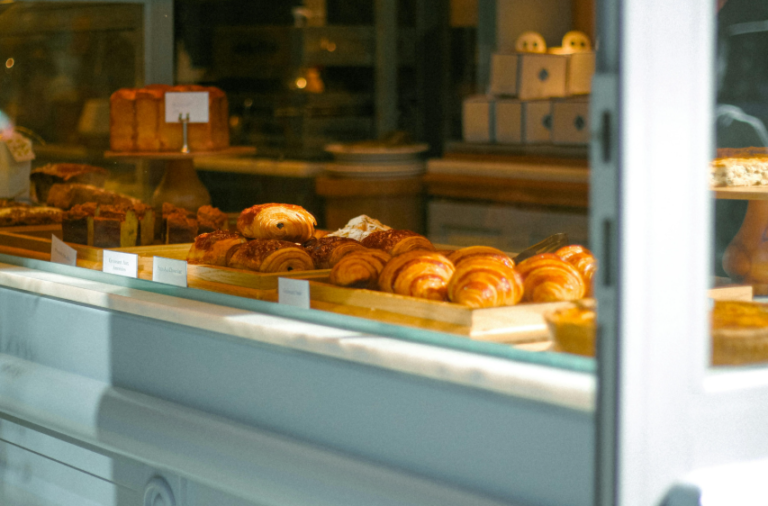
For laminated doughs, pastries, and frozen bakery lines, fast temperature reduction helps preserve moisture and protect product consistency during storage and transport.
Meat and Poultry Products
For meat applications, fast cooling and freezing are important for process hygiene, temperature control, and downstream shelf-life management. Food safety guidance consistently emphasizes clean handling, separation, and prompt chilling for perishable foods.
Ready-to-Cook and Ready-to-Eat Meals
In the fast-growing RTC/RTE category, processors need equipment that supports repeatability. When the end product is reheated by the consumer, texture recovery, moisture retention, and production consistency all become commercially important. FDA’s preventive-controls framework also makes clear that food safety management in such facilities must be based on risk analysis and appropriate verification activities.
Why Realmann Is More Than an Equipment Supplier
A blast chiller or freezer cabinet should not be selected by temperature alone. It should be selected by process logic.
That is where Realmann stands out.
From pressure-balance design to full stainless-steel construction, from tunnel-based hygienic layout support to dual-mode chilling/freezing flexibility, the equipment is positioned not simply as a refrigeration unit, but as part of a broader food engineering solution.
For food manufacturers facing shifting order structures, hygiene demands, and productivity pressure, the smarter question is no longer “How cold can the machine go?” The smarter question is:
Can this equipment fit the way our factory actually works?
With Realmann, the answer is built around workflow, zoning, and production flexibility.
Technical Quick Specs
- Product Type: Tunnel & Plug-In / Remote Blast Chiller & Freezer Cabinets
- Rapid Chilling: +90°C to +3°C / 90 minutes
- Deep Freezing: +90°C to -18°C / 240 minutes
- Temperature Range: +3°C to -40°C
- Capacity Options: 100–500 kg/h customized
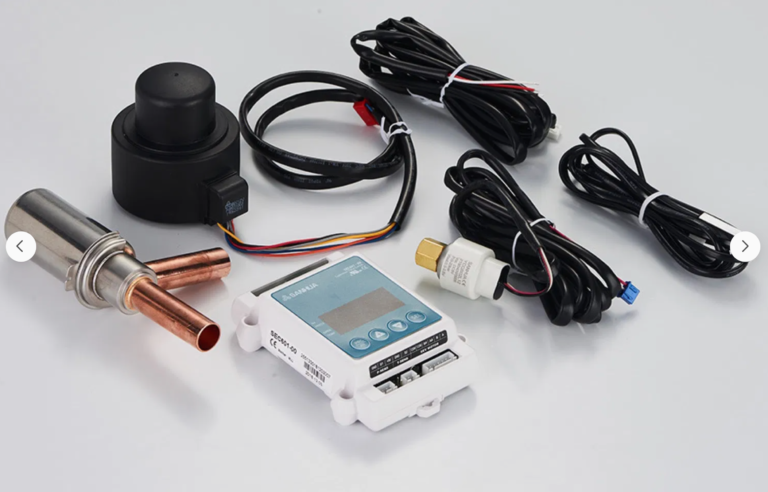
- Core Components: Imported-brand compressor, adaptive pressure system, wide-fin evaporator, variable-frequency fan
- Configuration Options: Plug-In / Remote
- Recommended Industries: Bakery, frozen pastry, meat, poultry, prepared meals, RTC, RTE
Conclusion
From chilling to freezing, from hygiene zoning to flexible throughput, Realmann offers food factories a more practical way to build modern cold-process capacity.
If your plant needs a system that can support both process compliance and commercial flexibility, Realmann TUNNEL & PLUG-IN / REMOTE BLAST CHILLER & FREEZER CABINETS provide a solution designed around real food production logic.
Talk to Realmann’s engineering team to customize a blast chilling and freezing solution for your factory layout, product category, and hourly output target.
FAQ
1. What is the difference between blast chilling and blast freezing?
Blast chilling rapidly lowers product temperature for short-term cold storage or next-step processing, while blast freezing pushes the product to a much lower temperature for long-term storage and frozen distribution. The choice depends on your product, shelf-life goal, and cold-chain strategy.
2. Why is tunnel design important in a food factory?
A tunnel design can support cleaner process flow between preparation and packaging zones. In food manufacturing, hygienic zoning, physical separation, and controlled movement of materials and personnel are widely recognized principles for reducing cross-contamination risk.
3. Is a tunnel blast chiller suitable for ready-to-eat food production?
It can be a strong fit, especially where the factory needs controlled flow, environmental management, and repeatable cooling performance. For ready-to-eat operations, food safety programs often require hazard-based preventive controls, and environmental monitoring may be necessary where contamination risk is identified.
4. How do I choose between plug-in and remote blast chiller systems?
Choose plug-in if you want easier installation and more flexible layout changes. Choose remote if you want heat and noise moved outside the production room and need tighter control of the indoor workshop environment.
5. What production capacity can Realmann provide?
Based on the specifications you shared, Realmann offers customized throughput from 100 kg/h to 500 kg/h, allowing the system to match different factory sizes and production plans.
6. Which food categories are suitable for this equipment?
Typical applications include dough products, frozen bakery items, meat and poultry products, and RTC/RTE prepared foods. The right setup depends on the product’s moisture, packaging method, target core temperature, and daily throughput.
7. Why is fast cooling important in food processing?
Fast cooling helps products move more quickly into controlled cold conditions, which supports safer handling and stronger process discipline. FDA safe food handling guidance emphasizes prompt chilling and separation of foods, while USDA/FSIS guidance highlights quick cooling as an important control to limit pathogen growth.
8. Can one machine handle both chilled and frozen product lines?
If designed for dual-mode operation, yes. That is one of the main commercial advantages of this type of system: it allows processors to switch production mode according to orders, seasonality, and SKU mix, which can reduce idle equipment time and improve ROI.