In a busy steakhouse, hotpot restaurant, hotel kitchen, or professional meat preparation area, refrigeration is not just about keeping products cold. It directly affects food safety, meat texture, moisture retention, operating cost, and daily kitchen efficiency.
That is why the beef four door dual temperature refrigerator has become an increasingly important solution in commercial foodservice environments. Instead of using separate cabinets for chilled meat and frozen stock, this type of equipment combines refrigeration and freezing in one machine, helping kitchens save space while improving workflow.
For operators handling premium beef, portioned meat, frozen inventory, and high-frequency door opening, the right cabinet can make a measurable difference. As a commercial refrigeration manufacturer, Realmann focuses on building refrigeration systems that do more than cool food. The goal is to help commercial kitchens reduce hidden losses, protect product value, and improve long-term profitability.
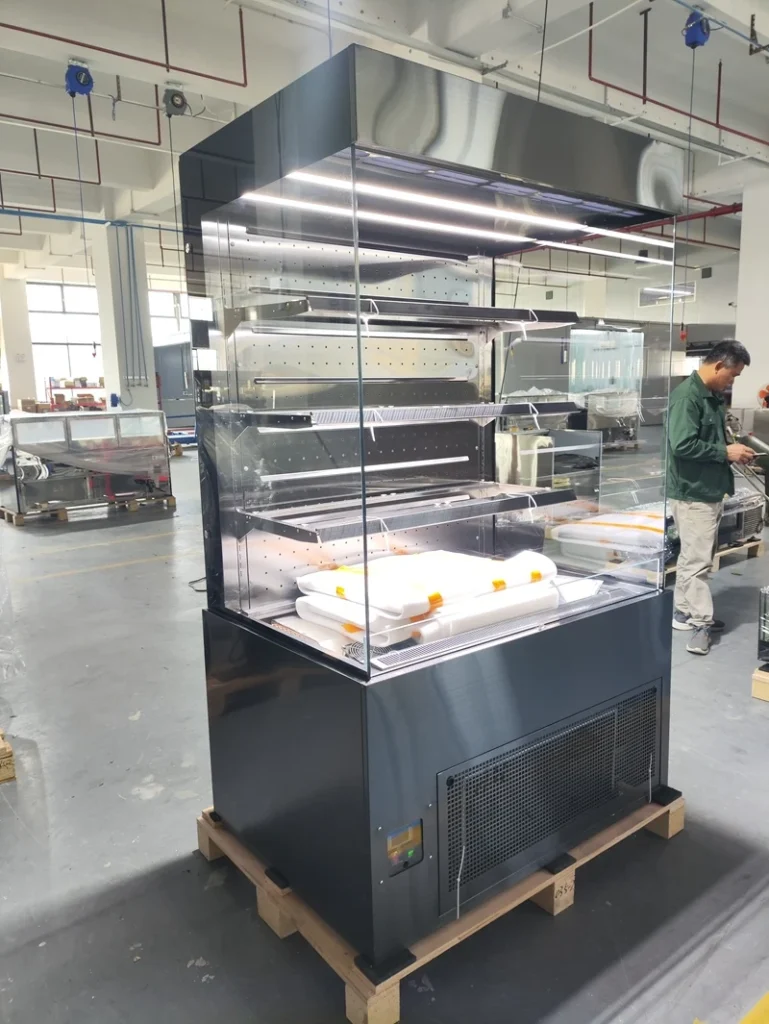
What Is a Beef Four Door Dual Temperature Refrigerator?
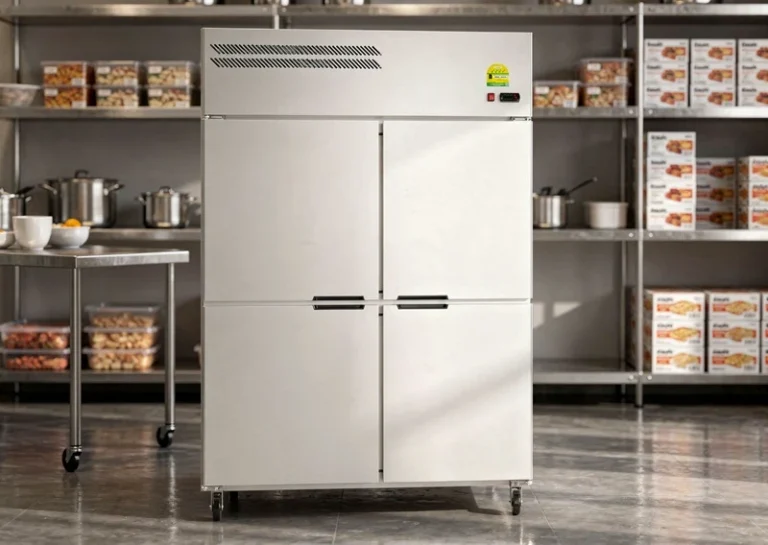
A beef four door dual temperature refrigerator is a commercial upright cabinet designed with:
- Four independent doors
- Two separate temperature zones
- One section for chilled storage
- One section for frozen storage
This configuration is ideal for kitchens that need to store fresh beef and frozen meat at the same time. The refrigerated section is usually used for short-term storage of fresh beef, portioned cuts, or pre-service ingredients. The frozen section is used for long-term storage of frozen meat and backup inventory.
This makes the equipment especially suitable for:
- Steak restaurants
- Western restaurants
- Hotpot chains
- Hotel kitchens
- Butcher preparation rooms
- Catering central kitchens
Instead of buying two separate units, operators can use one cabinet to support two storage needs with better space efficiency and cleaner kitchen organization.
Why Dual Temperature Storage Matters for Beef
Beef is a high-value ingredient. Poor temperature control does not just create food safety risks. It can also damage moisture, appearance, and yield.
Fresh beef requires a stable chilled environment to preserve color, texture, and handling quality. Frozen beef requires a different temperature range to maintain long-term storage stability. When both types of products are stored in the same kitchen, a dual temperature cabinet offers a more practical solution than forcing everything into a single-temperature refrigerator.
A well-designed beef four door dual temperature refrigerator helps kitchens:
- Separate fresh and frozen inventory correctly
- Reduce cross-temperature interference
- Improve back-of-house workflow
- Lower the risk of product loss during rush hours
- Use kitchen space more efficiently
For restaurants working with premium cuts, these advantages become even more important, because small losses in moisture and texture quickly become large losses in margin.
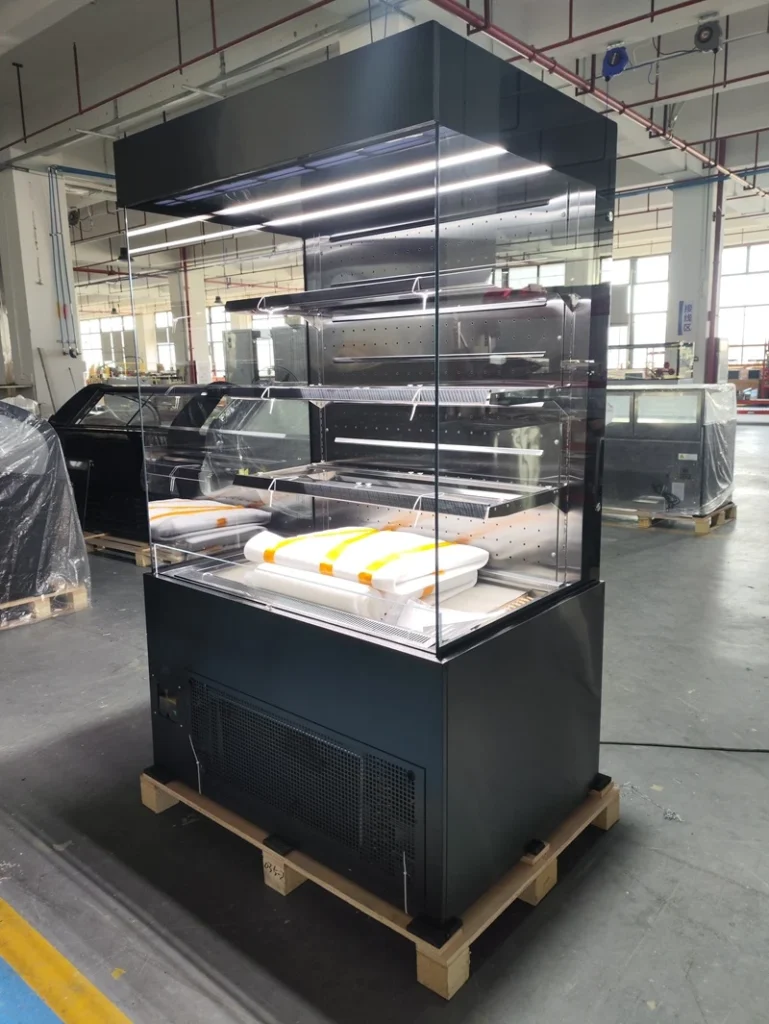
The Hidden Profit Loss in Traditional Commercial Refrigeration
Many commercial kitchens focus on purchase price when buying refrigeration equipment. But the real cost often appears later in daily operation.
1. High Energy Consumption
A conventional four-door refrigerator may consume much more electricity than expected. Over time, this becomes a silent operating burden, especially in kitchens running around the clock.
When the cabinet is opened frequently during lunch and dinner peaks, inefficient systems recover temperature slowly. That means the compressor works harder, the power bill rises, and the business pays for that inefficiency every day.
2. Meat Drying and Weight Loss
In lower-quality systems, excessive temperature differential and unstable airflow can strip moisture from the meat surface. For premium beef, moisture is not a small detail. It is part of the product’s texture, appearance, and saleable value.
When a refrigeration system dries meat out, the operator loses product quality and sometimes product weight as well. In a commercial kitchen, that is not just a technical issue. It is a profitability issue.
3. Poor Recovery During Peak Hours
During service, staff open and close refrigerator doors repeatedly. If the cabinet cannot recover temperature quickly, internal conditions become unstable right when food safety and speed matter most.
This is especially risky in restaurants with high turnover, prep-heavy kitchens, and busy hotel operations.
Realmann’s Engineering Approach: Built for Beef Storage Performance
As a commercial refrigeration manufacturer, Realmann focuses on improving both refrigeration efficiency and food preservation performance. In a beef four door dual temperature refrigerator, the value is not only in having two zones. The value is in how those zones are engineered.
2°C Micro Temperature Differential Heat Exchange
One of the key ideas behind advanced meat refrigeration is reducing unnecessary thermal stress inside the system. In conventional designs, large temperature differences can create aggressive cooling that removes moisture too quickly from meat surfaces.
Realmann’s engineering concept emphasizes a 2°C micro temperature differential heat exchange approach, which helps reduce excessive dehydration while supporting more stable storage conditions. For premium beef, this matters because moisture retention is closely linked to texture, appearance, and value.
High-Performance Insulation Structure
Efficient refrigeration starts with insulation. A cabinet that leaks cooling energy will always cost more to run.
Realmann uses a high-performance insulation concept to reduce heat exchange between the cabinet interior and the surrounding kitchen environment. Better insulation helps the unit maintain temperature stability, reduce compressor load, and improve overall efficiency.
Dynamic Cooling Control
A commercial refrigerator should not operate at one fixed output regardless of kitchen demand. Load conditions change throughout the day.
Realmann’s design philosophy includes dynamic system matching, where the refrigeration system responds more accurately to changing load conditions. This helps reduce no-load waste, improve temperature recovery, and support smoother operation during peak service hours.
Low Internal Heat Design
In many conventional cabinets, internal components themselves can create extra heat load. That increases energy consumption and makes temperature control harder.
A lower internal heat design supports true energy-saving performance by reducing unnecessary heat generation inside the cabinet and allowing the refrigeration system to focus on cooling food, not fighting cabinet inefficiencies.
Performance Focus: The 900L Four Door Dual Temperature Cabinet
For buyers comparing energy efficiency and operating cost, performance data matters.
In the product concept shown above, the Realmann 900L four door dual temperature cabinet highlights three strong efficiency indicators:
- 4.56 kWh under strict 32°C test conditions
- 3.1 kWh real average daily consumption
- EEI 48% for strong energy efficiency positioning
These figures reflect the direction modern buyers are looking for: not just cooling capacity, but lower daily electricity cost and better long-term operating efficiency.
For restaurant operators, every saved unit of electricity contributes directly to lower overhead. In multi-unit kitchens, those savings become even more meaningful over time.
Key Features to Look for in a Beef Four Door Dual Temperature Refrigerator
When choosing equipment for meat storage, buyers should look beyond basic dimensions and price. A high-quality cabinet should include the following considerations.
Independent Refrigeration and Freezing Zones
The chilled and frozen sections should operate independently enough to support their own storage functions without constant interference.
Accurate Digital Temperature Control
Stable digital control helps kitchens maintain suitable storage conditions for fresh beef, frozen meat, and daily prep ingredients.
Durable Stainless Steel Construction
Commercial kitchens need equipment that is easy to clean, corrosion resistant, and suitable for long-term use.
Efficient Airflow and Heat Management
Proper airflow matters. Too much aggressive drying harms meat quality, while poor circulation leads to uneven cabinet conditions.
Fast Temperature Recovery
This is especially important in kitchens with frequent door opening during busy service periods.
Low Energy Consumption
Energy savings are not just an environmental benefit. They are a cost-control advantage.
Where a Realmann Beef Four Door Dual Temperature Refrigerator Works Best
A Realmann beef four door dual temperature refrigerator is suitable for many foodservice environments.
Steak Restaurants
Ideal for storing chilled premium cuts and frozen reserve stock in one machine.
Hotpot Restaurants
Useful for kitchens that handle both daily thawing needs and frozen meat storage.
Hotels and Resorts
Supports large-volume kitchen operations where efficiency, consistency, and space planning matter.
Central Kitchens
Helps simplify storage planning for prepared meat, raw ingredients, and frozen backup inventory.
Butcher Prep Rooms
Useful where chilled handling and frozen storage need to coexist within a compact footprint.
How to Choose the Right Model
Before buying, operators should ask a few practical questions:
How much of the cabinet will be used for chilled beef, and how much for frozen stock?
How frequently will staff open the doors during peak hours?
Is moisture retention a priority for higher-value meat?
How important is energy consumption in long-term operating cost?
Does the kitchen need standard dimensions or a customized cabinet size?
As a commercial refrigeration manufacturer, Realmann can support projects that need more than a standard off-the-shelf cabinet. That may include custom sizing, internal layout changes, finish options, and storage configurations based on the actual kitchen workflow.
Maintenance Tips for Better Long-Term Performance
Even the best refrigeration equipment performs better with correct daily use.
Keep the door gaskets clean to maintain a strong seal.
Do not overload the cabinet or block air circulation.
Allow enough ventilation space around the unit during installation.
Clean drainage and interior surfaces regularly.
Reduce unnecessary door opening during peak operation when possible.
Check temperature settings as part of daily kitchen management.
Routine maintenance helps protect both energy efficiency and food safety.
FAQ
What temperature should fresh beef be stored at in a commercial refrigerator?
Fresh beef is commonly stored in a chilled range close to 0°C to 4°C, depending on kitchen operation, turnover speed, and product handling requirements.
What temperature should frozen beef be stored at?
Frozen beef is typically stored at -18°C or below for long-term preservation in commercial applications.
What is the advantage of a dual temperature refrigerator over two separate cabinets?
A dual temperature refrigerator combines refrigeration and freezing in one machine, helping save floor space, simplify kitchen workflow, and reduce equipment management complexity.
Is a four door dual temperature refrigerator suitable for steak restaurants?
Yes. It is especially suitable for steak restaurants because it allows operators to store chilled premium cuts and frozen backup stock in one organized cabinet.
Does wind cooling dry out meat?
In some systems, aggressive airflow and poor temperature control can increase surface drying. That is why temperature stability and balanced system design are important for meat storage.
Why is energy efficiency important in a commercial meat refrigerator?
Commercial kitchens operate for long hours, often every day. Lower energy consumption helps reduce electricity bills and supports better long-term return on investment.
What cabinet capacity is suitable for a medium-size restaurant?
This depends on menu size, turnover, and prep style, but many medium-size commercial kitchens consider a 900L four door dual temperature cabinet a practical starting point.
Can Realmann provide customized commercial refrigeration solutions?
Yes. As a commercial refrigeration manufacturer, Realmann can support customized solutions for size, internal layout, storage application, and project-specific requirements.
How often should a commercial dual temperature refrigerator be cleaned?
Daily surface cleaning is recommended, while deeper maintenance of seals, drainage, and airflow areas should be done regularly based on usage intensity.
Is stainless steel important for commercial refrigeration equipment?
Yes. Stainless steel is widely preferred in commercial kitchens because it is durable, hygienic, corrosion resistant, and easier to clean.
Conclusion
A beef four door dual temperature refrigerator is more than a storage cabinet. It is an operating tool that affects food quality, workflow, and energy cost every day.
For kitchens handling both fresh and frozen beef, the right solution can reduce hidden losses from high power usage, unstable recovery, and moisture damage. With a focus on temperature stability, energy efficiency, and practical commercial use, Realmann is committed to building refrigeration equipment that supports real kitchen performance.
If your business is looking for a more efficient and more reliable way to store beef in a professional kitchen, a well-designed four door dual temperature refrigerator is a smart investment.
Looking for a reliable commercial beef four door dual temperature refrigerator for your restaurant, hotel, or central kitchen project?
Contact Realmann today to discuss your storage requirements, cabinet size, temperature configuration, and customization needs. Our team can help you choose a commercial refrigeration solution built for energy efficiency, meat protection, and long-term kitchen performance.