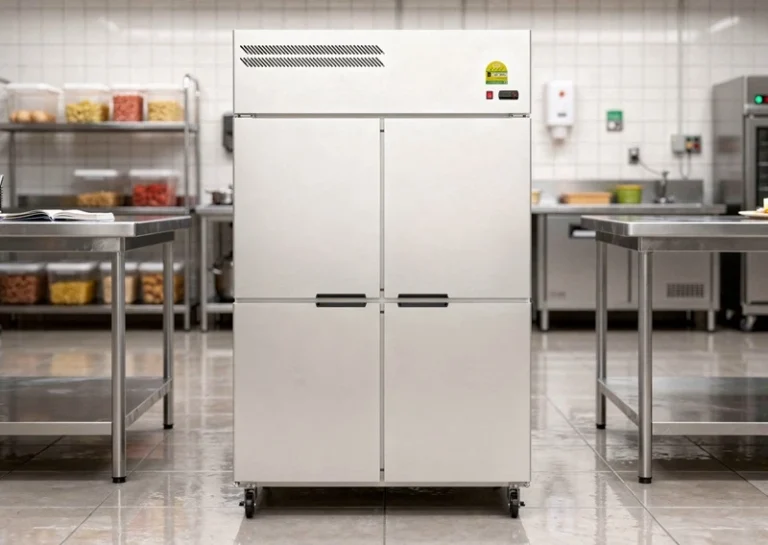
In the commercial refrigeration industry—whether you are contracting a multi-stage cold storage facility, ordering custom blast freezers, or procuring specialized condensing units—securing a large project is always a win.
However, large orders in industrial manufacturing come with structural supply chain risks. A common agreement in international trade is a 30% down payment (deposit) with 70% paid against delivery. While this sounds safe on paper, executing this incorrectly on multi-shipment or high-value orders can inadvertently create significant financial and operational vulnerabilities for both manufacturers and buyers.
Here is a practical breakdown of how custom refrigeration orders can fall into the “Deposit Trap” and how professional, structured workflows protect both parties.
1. The Customization Factor: Why Refrigeration Equipment is Different
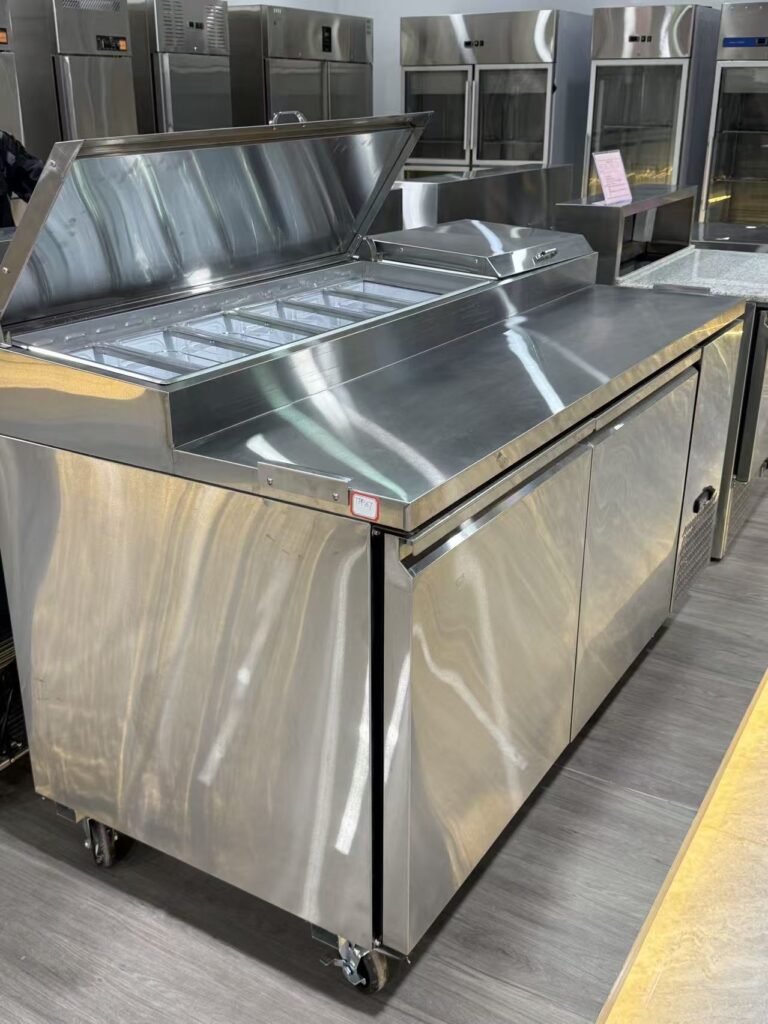
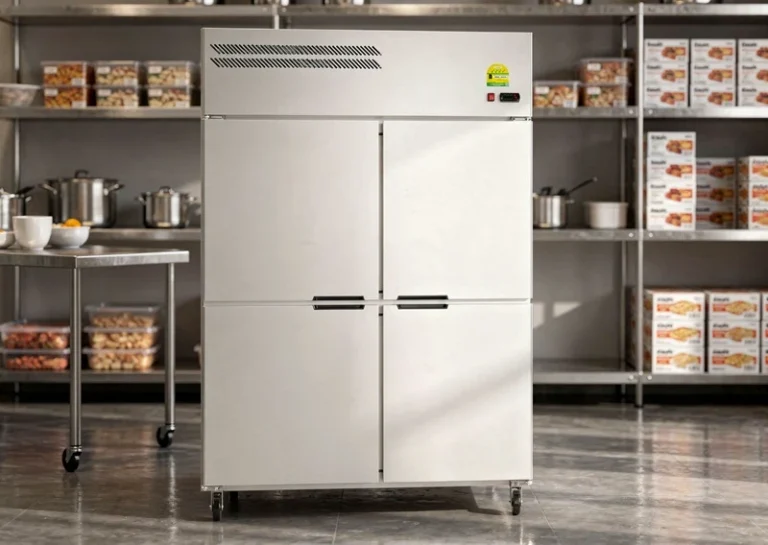
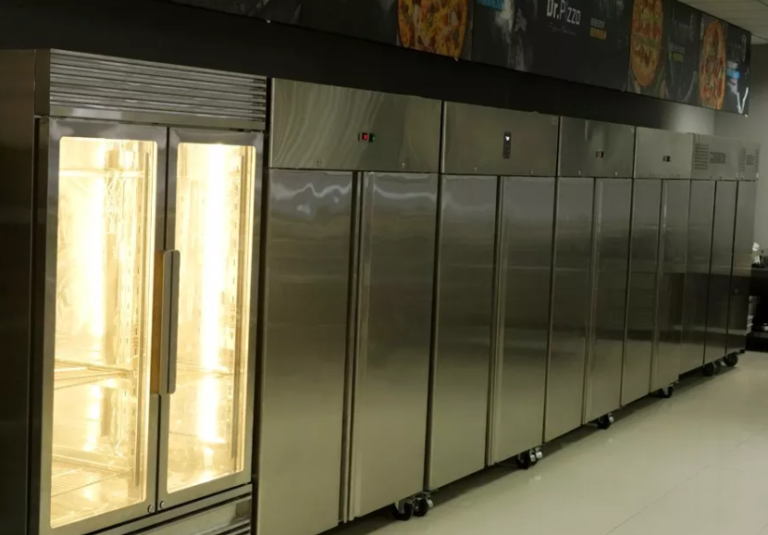
Unlike standard off-the-shelf consumer goods, commercial refrigeration equipment is inherently non-standard:
- Engineering Specs: Voltage/frequency ratings, refrigerant types (R404A, R744/CO2, R290), compressor brands (Bitzer, Copeland, Danfoss), and custom heat exchanger coil configurations.
- Structural Irreversibility: Custom-cut PU cold room panels, welded frame manifolds, and tailored PLC control cabinets cannot simply be resold to another client without massive refitting costs.
- High Holding Costs: Bulky walk-in panels and heavy condensing units occupy valuable warehouse floor space if shipments are delayed or abandoned.
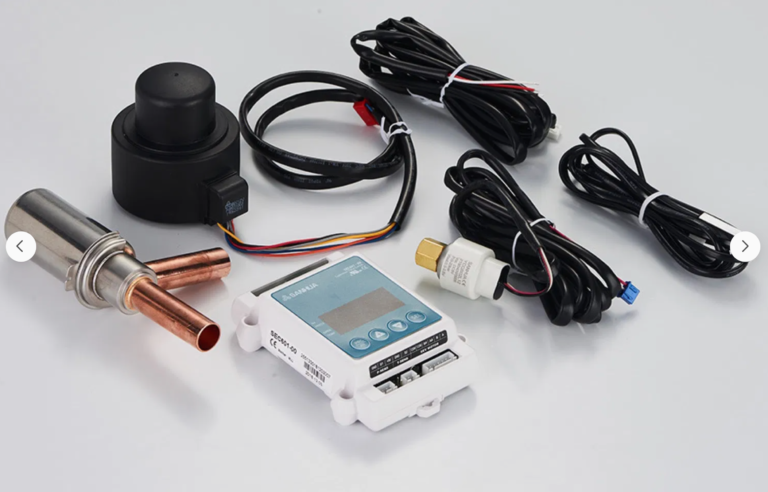
Because raw materials (copper, stainless steel, compressors, electronic expansion valves) account for a massive portion of the production cost, an unstructured cash flow mechanism can paralyze a factory’s operations or delay a client’s project timeline.
2. The “30% Deposit Trap” in Staggered Shipments
Consider a typical scenario: A buyer places a total order worth $500,000 for a cold storage expansion, structured into 5 equal batches ($100,000 per shipment). The buyer pays a 30% upfront deposit ($150,000).
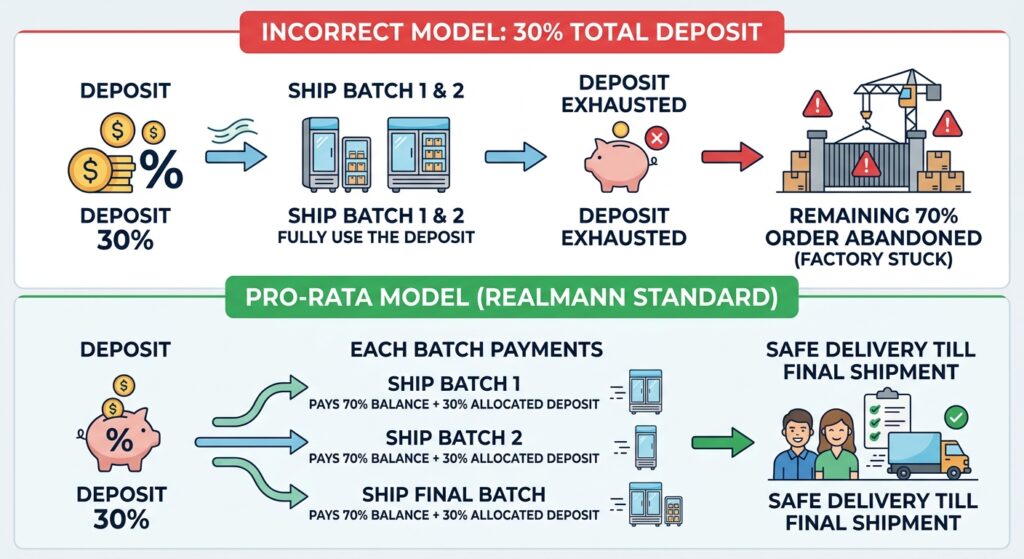
The Common Mistake:
If the supplier uses the $150,000 deposit to fully cover the first 1.5 shipments ($150,000 worth of equipment) and dispatches them without requiring additional balance payments, the deposit pool is completely consumed by Batch 1 and Batch 2.
The Consequence:
If the buyer encounters unexpected market shifts, site construction delays, or cash flow challenges on their end, they may pause or cancel Batches 3, 4, and 5. The factory is left with $300,000 worth of specialized, custom-engineered equipment stranded in storage, while the buyer has already received their initial units at a volume-discounted price without maintaining security for the remaining contract.
3. Best Practices: Structuring Win-Win Payment & Production Workflows
To ensure smooth project execution and long-term partnership stability, established refrigeration manufacturers and global EPC contractors implement four key safeguards:
A. Pro-Rata Deposit Allocation Per Batch
Deposits should remain proportional across all partial shipments.
- Using the $500,000 order ($150,000 deposit) as an example:
- For Batch 1 ($100,000 equipment value), 30% ($30,000) is deducted from the original deposit pool.
- The buyer pays the remaining 70% ($70,000) balance before dispatch.
- This cycle repeats for each batch, ensuring that a 30% security deposit remains active for the remaining unproduced/undelivered units until the final shipment is cleared.
B. Synchronized Raw Material Procurement
Instead of purchasing 100% of the raw components for a year-long order immediately upon receiving the initial deposit, raw material purchasing should be tied directly to the confirmed shipment schedule. Long-lead items (like specialized compressors or custom pressure vessels) are secured first, while general assembly follows the actual delivery cadence.
C. Comprehensive Credit Checking & Export Credit Insurance
Even with long-term B2B partners, economic environments change. Professional manufacturers regularly review credit limits and utilize export credit insurance (such as Sinosure) for large-scale contracts to hedge against unforeseen geopolitical or macro-economic risks.
D. Clear Component-Level Cost Thresholds
For highly customized engineering builds, the upfront deposit should always cover the non-recoverable BOM (Bill of Materials) costs (e.g., customized sheet metal, specialized control wiring, and non-returnable brand components).
Conclusion
In industrial engineering, strict financial protocols are not a sign of distrust—they are the foundation of a resilient supply chain. Clear, structured deposit mechanisms protect manufacturers from stranded inventory and ensure buyers receive consistent, high-quality, on-time deliveries without project interruptions.
Whether you are procuring custom blast freezers or designing large-scale commercial cold storage systems, partnering with a manufacturer that prioritizes supply chain transparency and structured risk management is key to long-term success.