The 2026 Guide to F-Gas Regulations:
How to Choose Future-Proof Refrigeration Cabinets
Updated April 2026 · 9 min read
If you source commercial refrigeration equipment for European or North American markets, 2026 is not a year to delay a purchasing decision. The F-Gas Regulation phase-down schedule, combined with tightening EPA rules in the United States, means cabinets running on high-GWP refrigerants like R404A or R134a are rapidly becoming a liability — financially, operationally, and legally. This guide explains exactly what’s changing, which refrigerants pass muster, and the technical criteria that separate truly future-proof eco-friendly refrigerant cabinets from those that simply delay the problem.
What the F-Gas Regulation Actually Requires in 2026 (and Beyond)
The EU F-Gas Regulation (EU) 2024/573 — the revised framework that replaced the 2014 regulation — sets an ambitious HFC phase-down trajectory, ultimately targeting an 85% reduction in CO₂-equivalent volumes placed on the market by 2036, relative to the 2009–2012 baseline. For commercial refrigeration, the practical consequences are already visible:
- GWP caps on new equipment: Hermetically sealed equipment (e.g., plug-in display cases) is now restricted to refrigerants with GWP below 150 in most cabinet categories — effectively ruling out R134a (GWP 1,430) and R404A (GWP 3,922).
- HFC quota restrictions: EU importers and producers of bulk HFCs face shrinking annual quotas. This is already pushing up the cost of R404A and R507A servicing gases — a hidden operating cost buyers often underestimate.
- EPA SNAP rules (USA): The US Environmental Protection Agency’s Significant New Alternatives Policy continues to de-list high-GWP refrigerants in specific end-uses. Retailers and food service operators importing equipment must verify SNAP acceptability for the intended application.
- UK F-Gas (post-Brexit): Great Britain maintains its own F-Gas framework with independent phase-down quotas. Exporters targeting the UK must treat compliance as a separate but parallel obligation.
R290 vs. R600a vs. HFOs: Choosing the Right Natural Refrigerant
Not all low-GWP alternatives are equal. The market broadly segments into three families: natural hydrocarbons (R290 propane, R600a isobutane), hydrofluoroolefins (HFOs like R1234yf), and CO₂ (R744). For commercial display and storage cabinets in the plug-in or remote condensing category, R290 and R600a have emerged as the dominant solutions — and for good reason.
| Refrigerant | GWP | EU Compliance | Energy Efficiency | Servicing Cost | Charge Limit |
|---|---|---|---|---|---|
| R290 (Propane) | 3 | Fully Compliant | Excellent | Low | 150 g (IEC 60335-2-89) |
| R600a (Isobutane) | 3 | Fully Compliant | Excellent | Low | 150 g (IEC 60335-2-89) |
| R1234yf (HFO) | 4 | Compliant | Good | Medium–High | No hard cap |
| R134a | 1,430 | Non-compliant (new equip.) | Moderate | Rising | — |
| R404A | 3,922 | Banned (new equip.) | Poor | Very High | — |
Why R290 Dominates Medium-Temperature Display Cases
Propane’s thermodynamic properties make it exceptionally well-suited to the +2°C to +8°C operating range typical of open display cabinets, grab-and-go coolers, and deli cases. Its latent heat of vaporization is significantly higher than R134a, meaning the compressor achieves the same cooling output with less mass flow — translating directly into energy savings of 10–20% in head-to-head comparisons. Combined with a GWP of just 3, the total lifecycle climate impact of an R290 cabinet is dramatically lower than any HFC alternative.
Why R600a Suits Upright and Chest Freezer Cabinets
Isobutane has long been the refrigerant of choice for domestic refrigerators, and its superior low-temperature performance — aided by a boiling point of −11.7°C — makes it equally attractive for commercial upright freezers and gelato display cases operating at −18°C to −22°C. Its excellent oil miscibility simplifies system design and contributes to long compressor service life.
“A cabinet that is compliant today but requires a refrigerant not available at scale tomorrow is not a future-proof investment — it’s a deferred liability.”
— Cold Chain Compliance Perspective, 2026
HACCP Compliance and Refrigeration: What Buyers Often Miss
HACCP (Hazard Analysis and Critical Control Points) is not a refrigerant regulation — but the choice of refrigerant cabinet has direct implications for your ability to maintain a robust HACCP plan. Regulatory auditors in the EU and US increasingly examine equipment specifications as part of food safety assessments. Here’s what connects refrigerant technology to HACCP compliance:
- Temperature stability: Eco-friendly refrigerant cabinets running R290 or R600a maintain tighter temperature bands because natural refrigerants respond faster to thermal load changes. Consistent temperatures are a core HACCP critical control point for perishable food storage.
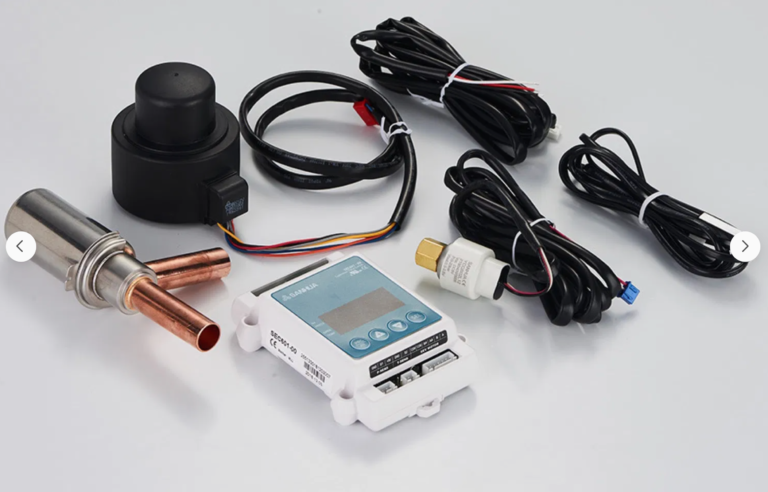
- Digital monitoring and alarm systems: Look for cabinets with integrated IoT-enabled temperature logging, door-open alarms, and remote monitoring capability. These features support HACCP record-keeping requirements and help auditors verify that CCPs are consistently met.
- Defrost cycle control: Poorly managed defrost cycles — particularly in legacy HFC systems — can cause brief temperature excursions that technically breach HACCP critical limits. Modern R290 cabinets with electronic defrost controls eliminate this risk.
- Refrigerant serviceability: A cabinet that cannot be economically serviced because its refrigerant is quota-restricted or banned is a HACCP risk. Natural refrigerants face no such supply uncertainty.
Technical Standards Your Supplier Must Meet
When evaluating manufacturers of eco-friendly refrigerant cabinets, demand documentary evidence of compliance with these standards. Vague “green” or “eco” claims without certification backing are meaningless in a regulatory audit context.
Mandatory Certifications Checklist
IEC 60335-2-89: Safety requirements for refrigerating appliances using flammable refrigerants. Mandatory for R290/R600a cabinets entering EU and many export markets. Verifies leak containment, charge limits, electrical safety, and ventilation adequacy.
ErP Directive / Ecodesign Regulation (EU) 2019/2024: Sets minimum energy performance standards for professional refrigerated storage cabinets. Verify that the cabinet meets or exceeds the applicable efficiency class.
CE Marking: Demonstrates conformity with all applicable EU directives, including the Low Voltage Directive, EMC Directive, and Machinery Directive where applicable.
UL or ETL Listing (North American markets): Equivalent safety verification for the US and Canada. Confirm the listing specifically covers flammable refrigerant operation.
ISO 9001 Manufacturing: Quality management system certification from the manufacturer’s production facility — ensures consistency across production batches, not just sample units.
5 Compliance Risks When Buying the Wrong Cabinet
- Stranded asset risk: Cabinets purchased with R404A or R134a may be unleasable or unsaleable within the EU before the end of their physical service life as regulations tighten. The depreciation curve is accelerating.
- Spiralling service costs: As HFC quota volumes shrink, the cost of refrigerant top-up for legacy systems rises sharply. Field data from 2024–2025 already shows a 40–60% price increase for R404A top-up gases in the EU.
- Import rejection: Cabinets destined for EU markets that fail to meet GWP caps or lack mandatory CE + IEC 60335-2-89 certification may be stopped at customs — a costly and reputationally damaging outcome for distributors.
- HACCP audit failure: Temperature excursions caused by refrigerant availability issues or non-certified equipment can trigger HACCP non-conformances — with food safety and liability implications far exceeding the equipment cost.
- Retailer and chain store rejection: Major EU and UK supermarket groups have procurement sustainability standards that go beyond legal minimums. A cabinet using high-GWP refrigerant may be rejected by corporate buyers with net-zero commitments.
What to Look for in a Manufacturing Partner
The regulatory landscape rewards buyers who select manufacturing partners with genuine technical depth in natural refrigerant systems — not those who have simply replaced one refrigerant label with another on an unchanged cabinet design. Here are the differentiators that matter:
Dedicated R290/R600a Engineering Capability
Flammable refrigerant systems require purpose-built design: spark-free electrical components inside the refrigerated zone, validated leak detection in enclosed installations, and hermetically tested jointing procedures. Ask potential suppliers for evidence of their R&D investment in hydrocarbon-specific design — not just a product spec sheet showing R290 compatibility.
Factory-Level Charge Verification
Every R290/R600a cabinet leaving the production line should have its refrigerant charge weighed and recorded against the design specification. Overcharged units represent both a safety risk and a compliance issue. Reputable manufacturers provide charge records as part of the unit’s documentation pack.
Energy Efficiency Leadership
An HACCP-compliant, F-Gas-compliant cabinet that consumes 30% more energy than competing products is a poor long-term value proposition — particularly as carbon pricing expands. Evaluate cabinets against the EU Ecodesign efficiency metrics and ask for independently verified energy consumption data, not just marketing claims.
Responsive Regulatory Documentation Support
For importers navigating EU customs, having a supplier who can rapidly produce Declaration of Conformity documents, test reports, and refrigerant charge records on request is operationally critical. Delays in documentation can hold shipments and disrupt your supply chain.
A Practical Buyer’s Evaluation Framework
Use this framework when comparing eco-friendly refrigerant cabinets from different suppliers. It translates the regulatory requirements above into concrete questions you can put to any manufacturer:
- What is the refrigerant type and GWP? Is it below the applicable EU/UK GWP cap for this cabinet category?
- Can the supplier provide a current CE Declaration of Conformity referencing IEC 60335-2-89 and the relevant ErP regulation?
- Is UL/ETL listing available for units destined for North American distribution?
- What is the measured energy consumption (kWh/24h) and how does it compare to the ErP benchmark for this product category?
- Does the cabinet include digital temperature logging and alarm outputs suitable for HACCP record-keeping?
- What is the refrigerant charge weight, and how is this verified and documented at the factory?
- What is the manufacturer’s ISO 9001 certification scope, and does it cover the production facility for this product line?
- Does the manufacturer have a dedicated R290/R600a design team, or has the refrigerant simply been substituted into an unchanged legacy chassis?
The Total Cost of Compliance: A Long-Term View
Refrigerant service cost trajectory. An R290 cabinet uses a refrigerant that costs a fraction of HFCs, faces no quota restrictions, and is available from any industrial gas supplier globally. Over a 10-year cabinet lifecycle, the difference in service gas costs between a compliant R290 system and a legacy R404A unit can approach or exceed the original purchase price differential.
Energy cost savings. At commercial electricity rates in the EU (averaging €0.20–0.35/kWh), a 15% efficiency improvement in an always-on display cabinet translates to several hundred euros of annual savings per unit. Across a fleet of 50 cabinets, that compounds into a significant return on the investment in higher-specification, HACCP compliant equipment.
Regulatory risk premium. A non-compliant cabinet imported into the EU exposes the importer to fines, confiscation, and reputational damage that dwarfs any short-term price saving. This risk premium should be explicitly priced into any comparative evaluation — a compliant R290 cabinet is almost always the lower-risk, lower-total-cost choice when the full picture is considered.
Ready to Source Fully Compliant, Future-Proof Refrigeration Cabinets?
Our factory specialises in R290 and R600a commercial refrigeration cabinets certified to CE, IEC 60335-2-89, and ErP standards — designed from the ground up for the European and North American compliance environment.
Request Compliance Documentation & Quotation CE certificates · IEC 60335-2-89 test reports · ISO 9001 scope · Factory visit welcome