Introduction
Rising electricity costs are no longer a marginal concern—they are a dominant operational expense in commercial kitchens. For restaurants, bakeries, supermarkets, and food processing facilities, commercial refrigeration cabinets often account for 30%–50% of total energy consumption.
Against this backdrop, investing in energy efficient reach-in freezers is not a trend—it is a strategic necessity. This article takes an engineering-driven approach to quantify energy savings, explain insulation technology advancements, and demonstrate how modern freezer design directly reduces long-term operating costs.
The Hidden Cost of Inefficient Refrigeration
Traditional reach-in freezers suffer from three major inefficiencies:
- Thermal leakage due to low-density insulation
- Compressor overwork caused by poor temperature retention
- Frequent defrost cycles increasing energy spikes
Typical Energy Profile
| Equipment Type | Avg Power Consumption | Annual Cost (Est.) |
|---|---|---|
| Standard Reach-In Freezer | 8–12 kWh/day | $350–$600 |
| Energy Efficient Model | 5–7 kWh/day | $220–$380 |
➡️ Annual savings per unit: $130–$250
➡️ 5-year lifecycle savings: $650–$1,250
For multi-unit kitchens, this becomes a significant operational margin improvement.
Engineering Perspective: Where Energy Savings Come From
1. Advanced Insulation Technology (18 Years of Optimization)
Realmann’s manufacturing experience focuses heavily on thermal barrier engineering.
Key improvements include:
- High-density cyclopentane foam insulation
- Reduced thermal conductivity (λ ≤ 0.022 W/m·K)
- Uniform foam injection eliminating air gaps
- Increased wall thickness without sacrificing internal volume
Result:
➡️ Up to 35% reduction in cold air loss
➡️ Compressor runtime reduced by 20–30%
2. High-Efficiency Refrigeration Systems
Modern commercial refrigeration cabinets integrate:
- Inverter compressors (variable speed control)
- Optimized refrigerant flow (R290 eco refrigerant)
- Smart temperature regulation algorithms
Measured impact:
- Energy consumption reduced by 25%–40%
- Temperature fluctuation minimized to ±1°C
- Faster recovery after door opening
3. Airflow & Heat Exchange Optimization
Energy efficiency is not only about insulation—it’s also about airflow dynamics.
Realmann systems feature:
- Multi-duct air circulation
- High-efficiency evaporators with wider fin spacing
- Balanced airflow distribution
Outcome:
- Faster cooling cycles
- Reduced frost accumulation
- Lower defrost frequency (saving ~10% energy)
Quantifying ROI: A Practical Scenario
Example: Medium-Sized Restaurant
- 3 reach-in freezers
- Electricity cost: $0.18/kWh
| Parameter | Standard Units | Energy Efficient Units |
|---|---|---|
| Daily Usage | 30 kWh | 18 kWh |
| Annual Cost | $1,971 | $1,182 |
| Savings | — | $789/year |
➡️ Payback period: ~1.5–2 years
➡️ Long-term ROI: High and predictable
Environmental Compliance & Certification
Modern buyers are not only cost-driven—they are compliance-driven.
Realmann units meet:
- Energy Class A / B standards
- Use of R290 natural refrigerant (low GWP)
- Reduced carbon footprint over lifecycle
This aligns with:
- Sustainability mandates
- Green building certifications
- Corporate ESG targets
Manufacturing Credibility: Why Experience Matters
Realmann is not a trading company—it is a commercial Refrigerator and Freezer Cabinets manufacturer with 18 years of engineering and production experience.
Proven Capabilities
- Long-term supplier for large retail chains (e.g., cake display cabinets for Sam’s Club supply chain)
- Full in-house production (insulation, assembly, testing)
- Support for low MOQ customization
- Global export experience with stable quality control
This manufacturing depth directly translates to:
- Consistent thermal performance
- Reliable component integration
- Lower failure rates in real-world operation
Customization for Operational Efficiency
Not all kitchens are the same. Energy efficiency improves further when equipment matches application.
Realmann supports:
- Custom dimensions for tight kitchen layouts
- Dual-temperature zones (freezer + refrigerator)
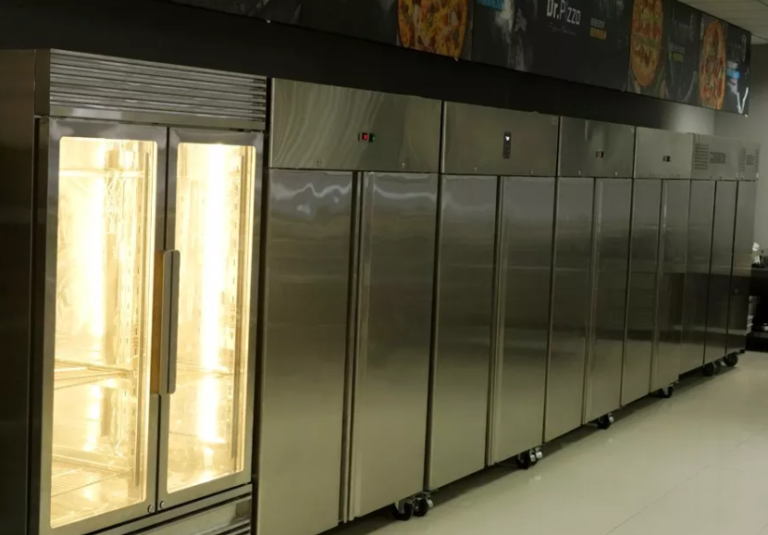
- Glass door / solid door configurations
- Smart control systems
➡️ Tailored solutions = optimized energy usage per scenario
Why Energy-Efficient Reach-In Freezers Are the Best Investment
From an engineering and financial standpoint, the conclusion is clear:
- Immediate reduction in electricity costs
- Lower maintenance due to reduced system stress
- Compliance with global environmental standards
- Strong ROI within 2 years
- Long-term operational stability
In a high-cost energy environment, inefficient refrigeration is no longer acceptable.
FAQ
1. How much energy can I realistically save?
Most users see 25%–40% reduction in energy consumption, depending on usage conditions and equipment age.
2. Are energy-efficient freezers more expensive upfront?
Yes, typically 10%–20% higher, but the payback period is short (1–2 years) due to energy savings.
3. What is the lifespan of a commercial reach-in freezer?
With proper maintenance, 8–12 years. Energy-efficient models often last longer due to reduced compressor strain.
4. Does insulation really make that much difference?
Absolutely. High-quality insulation can reduce thermal loss by over 30%, which directly impacts energy consumption.
5. Can I customize units for my restaurant?
Yes. Realmann supports low-volume customization, including size, temperature zones, and design features.
If you’re evaluating ways to reduce operating costs while upgrading your kitchen equipment, energy efficient reach-in freezers are one of the highest-impact investments you can make.
Realmann offers:
- Proven commercial refrigeration cabinets
- 18 years of insulation and refrigeration expertise
- Flexible customization with low MOQ
- Energy-efficient solutions designed for real-world performance
Contact us today to request technical specifications, energy consumption data, or a customized refrigeration solution tailored to your business.